
What a Pediatric Physical Exam Includes, Age by Age
Growth and vital signs, a head-to-toe examination, vision and hearing screening, developmental checks and immunizations — with the specifics changing as your child grows. Dr. Rozalyn Paschal-Thomas performs well-child, school and sports physicals at three South Florida offices.

Pediatric Physical Exam at a Glance
- What it is
- A preventive check-up covering growth, vital signs, a head-to-toe examination, screening and immunizations
- Also called
- Well-child visit, annual checkup, annual physical for kids, child wellness exam near me, child physical exam
- How long
- 20 to 30 minutes for a routine visit
- How often
- Seven times in the first year, then 15, 18, 24 and 30 months, then annually to age 21
- Who performs it
- Dr. Rozalyn Paschal-Thomas, MD, pediatrician
- Forms
- Florida DH 680 and school physical forms completed during the visit
- Insurance
- Usually covered as preventive care — a pediatrician that accepts Florida Medicaid, plus the commercial insurance plans accepted
- Offices
- Miami, North Miami Beach and Plantation — compare all three pediatric clinics
- To book
- (305) 758-0591 — or complete the new patient forms first
What Does a Pediatric Physical Exam Include?
A pediatric physical exam is a preventive check-up in which the pediatrician measures growth and vital signs, examines the body head to toe, screens vision, hearing and development for the child's age, reviews immunizations, and talks through nutrition, sleep, activity and safety with the family. It is the same appointment often called a well-child visit or annual checkup, and it is the core of what a kids doctor in Miami does across a childhood.
Measurements and vital signs
- Height and weight, plotted on growth charts so the trend matters more than any single number
- Head circumference for children under two
- Blood pressure from age three onward
- Heart rate, respiratory rate and temperature
- Body mass index once a child is old enough for it to be meaningful
The head-to-toe examination
- Head, eyes, ears, nose, throat and, in babies, the soft spots
- Teeth and gums for decay and alignment
- Heart and lungs listened to for murmurs, rhythm and breath sounds
- Abdomen palpated for tenderness or enlarged organs
- Spine checked for curvature, with scoliosis screening in older children
- Hips, limbs, muscle tone and reflexes
- Skin for rashes, birthmarks and unusual moles
- Genitals, briefly and age-appropriately, with a parent present
Screening and guidance
- Vision and hearing screening at the recommended ages
- Developmental and behavioural screening, including 2-year-old milestones and the red flags worth raising
- Immunization review against the schedule, with catch-up doses if needed — see immunizations and other pediatric services
- Anticipatory guidance: nutrition — from the baby formulas pediatricians recommend in infancy through the Nurture & Nourish childhood nutrition program — plus sleep, screen time, safety, and for teenagers a confidential conversation
Rozalyn H. Paschal M.D. P.A. Pediatrics performs these exams at all three offices, and any school or sports form is signed before you leave rather than mailed back later. The practice has been a Black-owned pediatric practice in Miami since 1953.
What Do They Do at Each Age?
The structure of the exam stays the same; the emphasis changes. A four-year-old check-up centres on the first formal vision and hearing screening and kindergarten immunizations. A twelve-year-old visit centres on puberty, scoliosis and a confidential conversation.
| Age | Main focus of the exam | Typically also |
|---|---|---|
| Newborn – 12 months | Weight against birth weight, jaundice, feeding, head circumference, reflexes, hips | First-year immunizations — see what a newborn pediatrician checks at each infant visit |
| 1 – 2 years | Walking, first words, growth, teeth, anaemia and lead risk assessment | Toddler developmental milestones |
| 3 – 4 years | Blood pressure begins; first formal vision and hearing screening; speech clarity, hopping, drawing | Kindergarten immunizations and the Florida school entry physical |
| 5 – 10 years | Growth and BMI, vision and hearing, dental health, school progress and behaviour | School forms, and FHSAA sports physicals for student athletes |
| 11 – 14 years | Puberty staging, scoliosis screening, mood and sleep, BMI | Adolescent vaccines; part of the visit may be one-to-one |
| 15 – 21 years | Confidential health conversation, mental health screening, blood pressure, sports clearance | College and immunization forms |
How Often Does a Child Need a Physical Exam?
Seven times in the first year, then at 15, 18, 24 and 30 months, then once a year from age three through age 21 — following the Bright Futures/American Academy of Pediatrics periodicity schedule.
Because all three offices share one chart under the practice's NCQA Patient-Centered Medical Home model, growth plotted at one office continues on the same chart at another. Babies are seen at three to five days old, then at one, two, four, six, nine and twelve months. Extra visits are added when a child has a chronic condition such as asthma, is being followed for slow growth, or needs a form signed outside the usual cycle.
Most insurance plans cover well-child visits as preventive care, which means the annual exam is usually the cheapest appointment a family will have all year and the one most often skipped.
A physical examination has to be done in person, so it cannot be replaced by a video visit — but pediatric telemedicine handles the follow-up questions that come out of one. For school-age children the practice also runs a partnership connecting students to primary care through their schools.
Well-Child, School and Sports Physicals
Three different appointments that overlap. One annual visit usually covers all three needs.
Well-child visit
The full preventive exam: growth, vital signs, head-to-toe examination, screening, immunizations and guidance. This is the appointment the others are usually built on.
Book a well-child visit
School physical
A shorter clearance exam confirming a child is healthy enough to attend, recorded on the Florida DH 680 form. August books out fast — the early scheduling guide explains why spring is better.
Florida school physicals
Sports physical
The FHSAA EL2 athletic clearance exam, adding a cardiac history, joint and flexibility assessment and injury review to the standard examination.
FHSAA sports physicalsIs a school physical the same as a well-child visit? Not quite. A well-child visit is the full preventive check-up; a school physical is a shorter clearance exam. Because a well-child visit satisfies the school requirement, booking the annual appointment usually covers both and saves a second trip.
What to Bring: The Parent's Checklist
Insurance card, photo identification, your child's immunization record, any forms that need signing, a list of current medications, and questions written down. Arriving with the paperwork done shortens the appointment.
Documents
- Insurance card
- Photo identification
- Immunization record
- School or sports forms
- New patient forms, if this is a first visit
Health information
- Current medications and doses
- Allergies
- Records from a previous pediatrician
- Any specialist reports
- Concerns you want raised
For your child
- Clothing that is easy to remove
- Glasses or hearing aids if worn
- A comfort item for younger children
- For teenagers, time alone with the doctor
Where to Book a Physical Exam
Three offices, one medical record. Monday to Friday, 9:00 AM to 5:00 PM.


Pediatrician in North Miami Beach
16800 NW 2nd Avenue, Suite 308
North Miami Beach, FL 33169
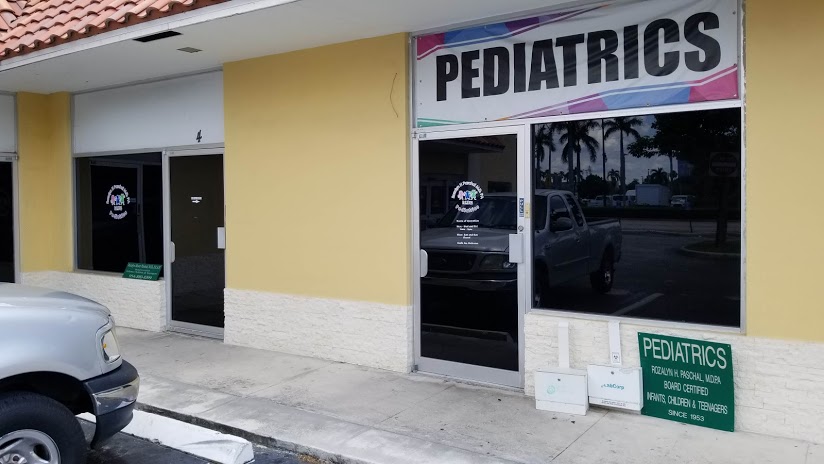
Pediatrician in Plantation, FL
660 N. State Rd. 7, Suite 4
Plantation, FL 33317
Questions Parents Ask
For more, see the full pediatric FAQ page.
Height, weight and head circumference plotted on growth charts; vital signs including blood pressure, heart rate, respiratory rate and temperature; a head-to-toe examination of eyes, ears, nose, throat, teeth, heart, lungs, abdomen, spine, skin, limbs and genitals; vision and hearing screening at the appropriate ages; developmental and behavioural screening; an immunization review; and a discussion of nutrition, sleep, activity and safety.
Height, weight and blood pressure, then the first formal vision and hearing screening for many children, a head-to-toe examination, and checks on speech clarity, drawing, hopping and balance. Kindergarten-entry immunizations are usually given at this visit, and the Florida school entry physical and DH 680 form can be completed at the same appointment.
Yes — it is a core part of pediatric primary care. A pediatrician performs well-child physical exams on the American Academy of Pediatrics schedule, plus school and sports physicals as needed. At Rozalyn H. Paschal M.D. P.A. Pediatrics these are done at the pediatric clinic at 7900 NW 27th Ave in Miami, the Spanish-speaking North Miami Beach office, and the Plantation pediatrician in Broward County.
For the family: insurance card, photo ID, immunization record, any forms needing signature, a list of medications, and questions written down. For the pediatrician: growth measurements, vital signs, the head-to-toe examination, vision and hearing screening, developmental screening, immunization review and anticipatory guidance.
Seven times in the first year — at 3 to 5 days, then 1, 2, 4, 6, 9 and 12 months — then at 15, 18, 24 and 30 months, and once a year from age three through 21, following the Bright Futures and American Academy of Pediatrics schedule.
Not quite. A well-child visit is the full preventive check-up; a school physical is a shorter clearance exam recorded on the Florida DH 680 form. A well-child visit satisfies the school requirement, so the annual appointment usually covers both.
Most plans cover well-child visits as preventive care. This practice accepts Florida Medicaid and most major commercial insurance plans, plus cash, debit and credit card. Staff verify your plan before the visit. No one is denied access to services due to inability to pay. This guide explains how Medicaid pediatric care works across all three offices.
Usually 20 to 30 minutes for a routine well-child visit, longer for a first visit with a new practice or when several forms need completing. Here is what to expect at a first pediatric visit.
Book Your Child's Physical Exam
Well-child, school and sports physicals at all three offices. Forms completed and signed during the visit.